
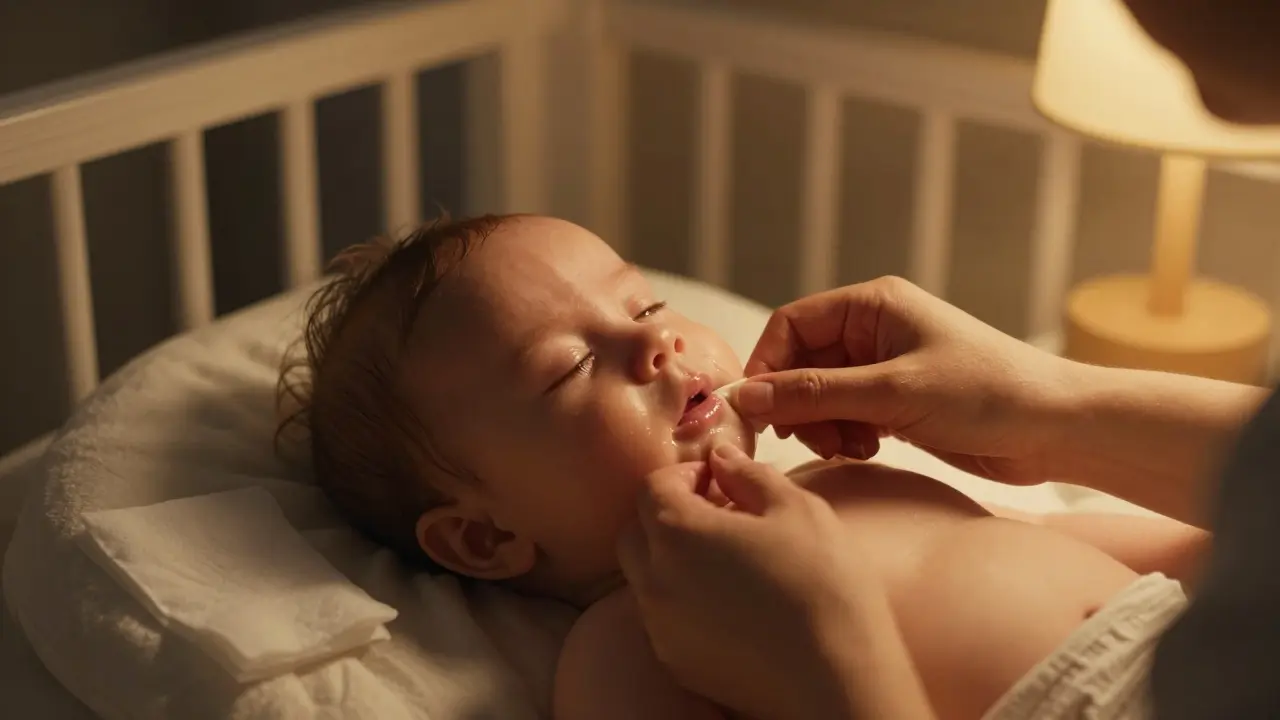
When your baby starts teething, you see it in their eyes - the fussiness, the drooling, the night waking, the constant chewing on everything within reach. It’s not just a phase; it’s a physical struggle. Their gums are swollen, tender, and often feel like they’re on fire. And while teething gels and painkillers are common fixes, there’s a gentler, more natural way that works just as well - and sometimes even better: masáž kojenců.
Proč masáž pomáhá při zubání?
When a tooth pushes through the gum, it triggers nerve endings that send pain signals to the brain. The pressure builds up slowly, and the baby can’t explain what’s wrong. That’s where touch comes in. Gentle massage doesn’t just distract - it actually reduces pain by stimulating blood flow and releasing endorphins, the body’s natural painkillers.
Studies from the University of Michigan and the American Academy of Pediatrics show that babies who received daily gum massages during teething cried 30% less and slept longer at night compared to those who didn’t. It’s not magic. It’s physiology. Your fingers, warm and steady, apply light pressure that mimics the sensation of a teething ring - but with the added comfort of your presence.
Jak správně masírovat dítěti dásně?
You don’t need special tools. Just clean hands, a calm environment, and a few minutes of your time.
- Wash your hands thoroughly with soap and water. Trim your nails so you don’t scratch the gums.
- Wipe your fingers with a clean, damp cloth to remove any residue. You can lightly dampen them with cool water - not cold, just cool.
- Let your baby sit on your lap or lie on their back, with their head supported. Make eye contact and speak softly. This isn’t a procedure - it’s bonding.
- Use your index finger or thumb. Gently press on the outside of the gums near where the tooth is coming in. Don’t rub hard. Use small circular motions - like you’re turning a tiny doorknob.
- Focus on the area that feels swollen or warm to the touch. If your baby turns away, stop. Don’t force it. Try again later.
- Massage for 1-2 minutes per side. Two to three times a day is enough. Morning and bedtime are the best times.
Some parents use a chilled (not frozen) washcloth or silicone finger brush. That’s fine, but don’t skip the touch. The warmth of your skin matters more than the tool.
Co dělat, když dítě nechce, aby jste mu masírovali dásně?
It’s normal. When gums hurt, babies resist touch - even from you. Don’t give up, but don’t push either.
- Try massaging during a calm moment - after a bath, during a diaper change, or while rocking.
- Let your baby hold your finger first. Let them chew on it gently. Once they feel safe, slowly move your finger to the gum area.
- Use a teething toy they already like. Massage the toy against their gums while you hold it. Then, gradually replace the toy with your finger.
- Play soft music or sing a lullaby. Rhythm helps them relax.
If your baby screams or pulls away every time, wait a day or two. Try again when they’re less fussy. Patience beats pressure.

Co je lepší než tečky a gely?
Teething gels with benzocaine or lidocaine are often marketed as quick fixes. But the FDA warns against them for children under two. They can cause a rare but dangerous condition called methemoglobinemia, which reduces oxygen in the blood.
Home remedies like frozen teething rings? They can numb the area - but they also risk freezing the tissue. A hard ice cube wrapped in cloth? Too risky. Even amber necklaces? No scientific proof they work, and they pose a choking hazard.
Massaging with your fingers? Safe, free, and proven. It doesn’t just relieve pain - it builds trust. Your baby learns that you’re their safe place when things hurt.
Když masáž nestačí - co dál?
Not every baby responds the same way. If your child is still crying nonstop, has a fever over 38°C, refuses to eat, or has diarrhea, it’s not just teething. Those are signs of infection or illness.
Teething doesn’t cause high fever, vomiting, or rashes. If you see those, call your pediatrician. But if the pain is localized to the gums and your baby is just extra fussy, keep massaging. Combine it with:
- Cool (not cold) foods: chilled apple slices, yogurt, or cucumber sticks (always supervise).
- Extra cuddles and skin-to-skin contact.
- Consistent bedtime routine. Sleep deprivation makes pain feel worse.
Many parents notice that after a few days of daily massage, their baby’s nighttime waking drops by half. One mother from Brno told me: “I started massaging after three nights of no sleep. On day four, he slept six hours straight. I cried - not from sadness, but relief.”

Proč je masáž důležitá i po zubání?
It’s not just about pain relief. Regular infant massage builds nervous system regulation. Babies who get daily touch - even when they’re not teething - develop better sleep patterns, stronger immune responses, and lower stress hormones.
Studies from the Touch Research Institute in Miami show that infants who received 15 minutes of daily massage had 30% lower cortisol levels - the stress hormone - after just two weeks. That’s not just comfort. That’s long-term health.
Think of it this way: every time you massage your baby’s gums, you’re not just helping them through teething. You’re teaching their body how to calm down. That skill lasts a lifetime.
Když začnete?
You don’t need to wait until the first tooth appears. Start as soon as you notice signs: increased drooling, chewing on fists, irritability, swollen gums. Even before the tooth breaks through, the pressure is building.
Keep a small towel nearby. Wipe away drool often - wet skin can get irritated. Offer a clean, cool teether. But never replace your touch with a toy. Your hands are the most powerful tool you have.
Teething lasts months - not days. The first teeth come around 6 months, but the full set takes two to three years. You’ll go through this again with molars. Be ready. Keep your hands clean. Keep your patience steady. And remember: you’re not fixing a problem. You’re holding your child through a natural, painful, but temporary stage.
They’ll forget the pain. But they’ll never forget how you held them when it hurt.